Cleopatra Lived Closer to the Moon Landing Than to the Great Pyramid
The Great Pyramid was already about 2,500 years old when Cleopatra ruled Egypt. Here is the math, and why it feels so wrong.
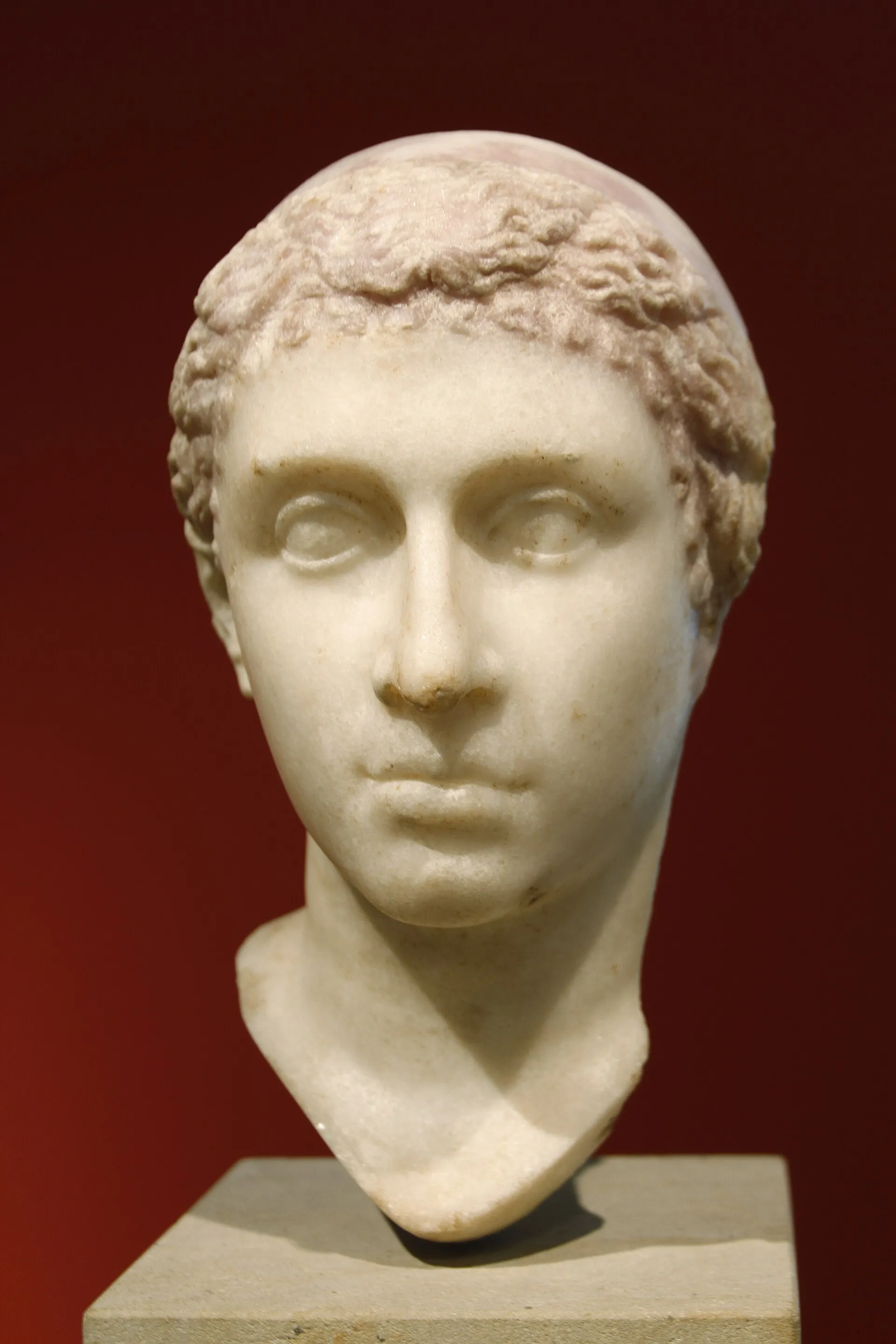

Picture Cleopatra standing in front of the Great Pyramid of Giza. It is an easy image to imagine, because in most of our heads “ancient Egypt” is one big era. Pharaohs, pyramids, mummies and Cleopatra all seem to live in the same dusty century.
They didn’t. When Cleopatra was queen, the Great Pyramid was already an ancient ruin from a lost age. And the gap between her and the pyramid’s builders is bigger than the gap between her and us.
In fact, Cleopatra lived closer in time to the first Moon landing than to the building of the Great Pyramid.
Let’s do the math
The Great Pyramid was built for the pharaoh Khufu, who ruled around 2589 to 2566 BC. Historians usually date the finished pyramid to about 2560 BC.
Cleopatra VII, the famous Cleopatra, was born in 69 BC, became queen in 51 BC and died in 30 BC.
So from the pyramid to Cleopatra:
- 2560 BC to 30 BC is about 2,530 years.
From Cleopatra to Apollo 11, which landed on the Moon on 20 July 1969:
- 30 BC to AD 1969 is 1,998 years. (There is no year zero, so you subtract one.)
That is more than 500 years in favour of the Moon landing. The exact date of the pyramid could move a few decades either way, but no serious date closes a gap that large.
The pyramid was “ancient history” to her too
For Cleopatra, the Great Pyramid was what the Roman Colosseum is to us, only much older. It was a famous monument from a world that no longer existed.
Visitors were already writing about it as a wonder of the past. The Greek historian Herodotus toured Egypt around 450 BC, more than four centuries before Cleopatra was born. Even then, the pyramid was over 2,000 years old. He wrote down what local guides told him: that its builders worked in gangs of 100,000 men, changing every three months. Modern archaeologists think that number is far too high, but it shows how mysterious the pyramid already felt in his time.
Between the pyramid age and Cleopatra, Egypt had been ruled by Libyans, Nubians, Persians and Greeks since the pyramid age.
Cleopatra wasn’t even Egyptian by family
Here is another surprise. Cleopatra’s family was Greek, not Egyptian.
After Alexander the Great died in 323 BC, his generals divided his empire. One of them, a Macedonian named Ptolemy, took Egypt. In 305 BC he declared himself king, and his descendants ruled Egypt for almost 300 years. Cleopatra was the last of them.
The Ptolemies ran their court in Greek and built the great city of Alexandria on the Mediterranean coast. According to the Roman-era writer Plutarch, Cleopatra was the first ruler of her family who bothered to learn the Egyptian language. Plutarch also claims she spoke with many foreign peoples without an interpreter. Modern scholars treat his long list of languages with some caution, but the point about Egyptian is widely repeated.
So the woman we picture as the ultimate Egyptian queen was a Greek-speaking ruler, living in a Greek city, looking at monuments that were already older to her than she is to us.
Why this feels so wrong
There are two reasons our brains squash these dates together.
First, school and films show ancient Egypt as one package. The pyramids, Tutankhamun and Cleopatra appear on the same page, in the same costumes. But Egyptian civilisation lasted around 3,000 years. Tutankhamun, who ruled around 1330 BC, sits roughly in the middle: about 1,200 years after Khufu and 1,300 years before Cleopatra.
Second, humans are bad at feeling large numbers. A thousand years and three thousand years both just feel like “a really long time ago”. We only notice the difference when we line the numbers up side by side.
More timelines that break your brain
Once you start lining up dates, you find more of these:
- Woolly mammoths were still alive when the pyramids went up. A small population survived on Wrangel Island, off the coast of Siberia, until about 4,000 years ago, a few centuries after the Great Pyramid was finished.
- Cleopatra and Julius Caesar are closer in time to the invention of the printing press than to the pyramid builders. Gutenberg’s press appeared around 1450, about 1,480 years after Cleopatra.
- Oxford University is older than the Aztec Empire. Teaching was going on at Oxford by 1096. The Aztec capital, Tenochtitlan, was founded in 1325.
History is much longer, and much stranger, than the textbook timeline makes it look.
Sources
- Encyclopaedia Britannica, “Cleopatra” (life dates and reign)
- Encyclopaedia Britannica, “Pyramids of Giza” (date of Khufu's pyramid)
- NASA, “Apollo 11” mission page
- Plutarch, Life of Antony 27 (Cleopatra's languages)
- ASOR / ANE Today, “Cleopatra's Languages” (2024)
- Herodotus, Histories 2.124 (his account of the pyramid's builders)
- University of Oxford, “History” (teaching by 1096)
- Carl Zimmer, “The Last Stand of the Woolly Mammoths,” The New York Times, 27 June 2024
Spotted a mistake? Tell us and we will correct it.